











The Technique
How All-on-4 Actually Works
All-on-4 replaces a full arch of teeth with a fixed bridge supported by four dental implants, two placed upright toward the front of the jaw and two placed at an angle toward the back.
The angle of those back implants is what makes the technique work for so many people. After teeth have been missing for a while, the bone at the back of the jaw often shrinks, and important structures sit close by: the sinuses in the upper jaw and a nerve in the lower jaw. Tilting the rear implants lets them reach into denser bone further forward, avoid those structures and still support teeth all the way back to the molar area. This often reduces or avoids the need for bone grafting.
All-on-4 is one of several full-arch options within our dental implant services. Every case is planned in 3D before surgery, and implants are placed using computer-guided implant surgery when it benefits the case.
Compare
All-on-4 vs Other Full-Arch Options
There is more than one way to replace a full arch of teeth. This is how the main choices compare.
| Option | How it stays in | Chewing and comfort | Good to know |
|---|---|---|---|
| Conventional denture | Rests on the gums, sometimes with adhesive | Can move when eating; covers the palate on the upper jaw | Does not stop bone loss; needs relining as the jaw changes |
| Implant-retained overdenture | Snaps onto two or more implants | Much more stable than a regular denture | Removable for cleaning; a lower-cost implant option |
| All-on-4 fixed bridge | Screwed onto four implants | Feels and functions much like natural teeth; no palate coverage | Only removed by your dental team; helps preserve the bone |
| Individual implants or multiple bridges | Six or more implants with separate sections | Very natural feel | Needs more bone and more implants; longer treatment |
The right choice depends on your bone, your health, your budget and how you want your teeth to feel day to day. In some cases, a combination of treatments is planned as part of a full mouth reconstruction.
Candidacy
Is All-on-4 Right for You?
All-on-4 is often a strong option if you are missing most or all of your teeth in one or both jaws, have teeth that are failing because of decay or gum disease, or are tired of loose dentures.
Factors in your favour
- Good general health, or well-managed conditions
- Enough bone at the front of the jaw, confirmed by a CBCT scan
- Willingness to keep up daily cleaning and maintenance visits
- Being a non-smoker, or willing to stop around surgery
Things we will look at closely
- Uncontrolled diabetes, which slows healing
- Smoking or vaping, which raises the risk of implant problems
- Certain bone medications or past radiation to the head and neck
- Heavy grinding, which affects material choice and night guard needs
None of these automatically rule you out. They simply shape the plan, and we will talk through them openly at your consultation.
Surgery Day
What Happens on Treatment Day
For most patients, failing teeth come out and new fixed teeth go in on the same day.
- 01SedationMost patients choose IV sedation, so they are deeply relaxed and remember little of the procedure.
- 02ExtractionsAny remaining teeth that cannot be saved are removed gently and the sites are cleaned.
- 03Implant placementFour implants are placed following the 3D plan, two upright and two angled.
- 04Temporary bridgeA fixed temporary bridge is fitted and attached, usually the same day or the next.
- 05Going homeYou go home with detailed instructions, medication and an adult to look after you.
Learn more about how we keep surgery comfortable on our sedation dentistry and oral surgery pages.
Healing
Recovery and Eating, Week by Week
| Stage | What to expect | Eating |
|---|---|---|
| First 3 days | Swelling, bruising and soreness peak, then begin to ease | Liquids and very soft, cool foods |
| Week 1 to 2 | Most people are back at work and daily routines | Soft foods you can cut with a fork, such as eggs, fish and pasta |
| Weeks 2 to 12 | The implants fuse with the bone; speech and comfort keep improving | Soft diet; avoid hard, crunchy and very chewy foods |
| Around 3 to 6 months | Healing is checked and the final bridge is made and fitted | Return to a normal diet with your final teeth |
The soft diet during healing matters. The temporary bridge protects the implants while they integrate, and biting hard foods too early is one of the most common reasons temporaries crack.
Final Teeth
Choosing the Material for Your Final Bridge
Zirconia
A very strong, stain-resistant ceramic that can be shaped and coloured to look highly natural. It is a popular choice for patients who want the most durable, lifelike result.
Acrylic on a titanium frame
Lightweight teeth and pink gum material over a precision metal framework. It is gentler on the opposing teeth and easier to repair, though the teeth may wear and need refreshing over the years.
Design details
Whatever the material, the shape, colour, tooth length and gum display are designed with you, using photographs and your temporary bridge as a guide, so the final smile looks natural for your face.
Adjusting
Getting Used to Your New Teeth
Speech
Your tongue needs a little time to adapt to the new shape of your teeth. Some sounds, especially s and f, may feel different for the first week or two. Reading aloud speeds this up, and small adjustments to the bridge can help if a sound stays difficult.
Bite and chewing
After years of missing teeth or loose dentures, chewing muscles need to relearn how to work with a stable bite. Start with small bites and cut food into pieces. Your bite is checked and fine-tuned at follow-up visits.
Upper versus lower jaw
The upper jaw usually has softer bone and the sinuses above it, so planning there focuses on angling implants to reach good bone. The lower jaw tends to have denser bone but a nerve to protect. Both arches can be treated in one surgery or separately.
Taste and comfort
Because a fixed bridge does not cover the roof of your mouth the way an upper denture does, many patients notice that food tastes better and their mouth feels less crowded right away.
Be Informed
Questions to Ask Before Choosing a Provider
Full-arch treatment is a major decision. Whoever you choose, these questions are worth asking.
How will my treatment be planned?
Ask whether a 3D CBCT scan and digital planning are used, and whether surgery is guided. At our office, both are part of every All-on-4 case.
Who does the surgery and who makes the teeth?
Continuity matters. Ask whether the same team handles planning, surgery, the temporary bridge and the final teeth, or whether you will be passed between offices.
What is included in the estimate?
A clear estimate should list extractions, grafting if needed, sedation, the temporary bridge, the final bridge and follow-up visits, so there are no surprises later.
What happens if something needs repair?
Ask how maintenance works, what a typical repair involves and how often the bridge is removed for professional cleaning.
Long Term
Caring for All-on-4 for Decades
Implants cannot decay, but the gum and bone around them can become inflamed if plaque builds up, a condition called peri-implantitis. Daily cleaning and regular professional care are what keep that from happening.
- Brush twice daily, including where the bridge meets the gum
- Use a water flosser or bridge floss to clean underneath every day
- Attend maintenance visits every three to six months through our general dentistry team
- Expect the bridge to be removed periodically by your dental team for a deep clean and check
- Wear a night guard if you clench or grind
Like any restoration, the teeth on an All-on-4 bridge may need repair or replacement after many years of use, while the implants themselves are designed to last much longer. Questions? Contact our Oakville office or meet our implant team.
Our Team
Full-Arch Care Under One Roof
Full-arch implant treatment works best when planning, surgery and the final teeth are handled by one coordinated team. At Family Dentist Tree, our implant team includes a Fellow of the International Congress of Oral Implantologists and a periodontist who is a Fellow of the Royal College of Dentists of Canada, and every dentist is registered with the Royal College of Dental Surgeons of Ontario (RCDSO).
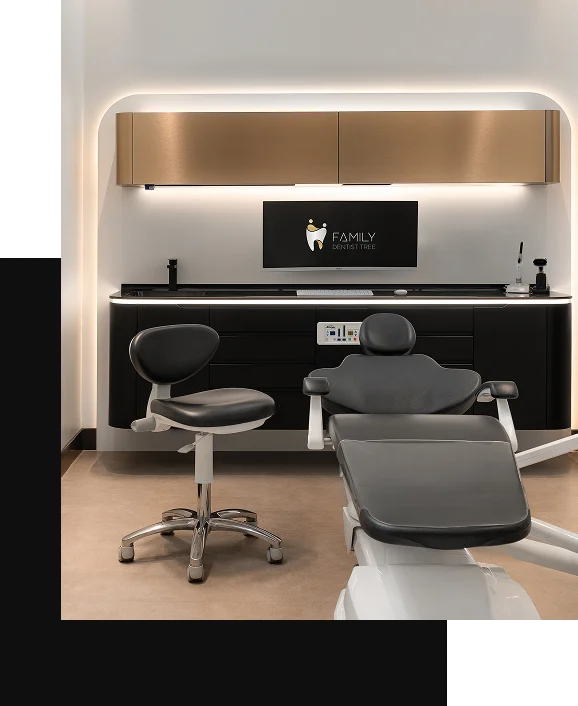
CBCT imaging, digital planning, 3D-printed surgical guides, a dedicated surgical suite and IV sedation are all available in our Oakville office. That means your scans, surgery, temporary teeth, final bridge and long-term maintenance all happen in one familiar place, with the same people who know your case from the first consultation.
FAQ
More All-on-4 Questions
Will I ever be without teeth during All-on-4 treatment?
In most cases, no. When the implants are stable enough at surgery, a fixed temporary bridge is attached the same day or within a day or two, so you leave with teeth. If your bone needs extra healing time before teeth can be attached, we will tell you in advance and plan a temporary option.
Can I take All-on-4 teeth out?
No, and that is one of the main differences from dentures. The bridge is screwed onto the implants and can only be removed by your dental team, usually during maintenance visits so the implants and the underside of the bridge can be cleaned thoroughly.
Does All-on-4 surgery hurt?
The surgery is done under local anaesthetic, usually with IV sedation, so you should not feel pain during the procedure. Afterward, swelling and soreness are common for several days and are managed with prescribed or over-the-counter medication. Many patients say recovery was easier than they expected.
How do I clean under an All-on-4 bridge?
Brush the teeth and gum line twice a day with a soft brush, and use a water flosser or specialised floss to clean underneath the bridge where food can collect. Professional maintenance visits every three to six months keep the implants and gums healthy.
What is the difference between the temporary and final teeth?
The temporary bridge is lighter and made to protect the implants while they fuse with the bone, so it requires a softer diet. After about three to six months, it is replaced with the final bridge, which is stronger, more refined in appearance and designed for a normal diet.
Can I get All-on-4 if I have worn dentures for years?
Often, yes. Long-term denture wear causes the jawbone to shrink, but All-on-4 is designed to work with the denser bone toward the front of the jaw, and angled implants make good use of what remains. A 3D CBCT scan shows whether your bone is suitable or whether grafting is needed first.
Payment
Payment Options
We believe in transparency and will keep you informed about the cost of All-on-4 implants. Family Dentist Tree accepts Canadian Dental Care Plan (CDCP) coverage. We provide direct billing to most insurance companies and can receive payment directly on your behalf. We also offer payment plan arrangements when you prefer to spread out the cost of your dental implant treatment.
Call (647) 362-8140 with questions. We are here to help.
Patient Reviews
5-Star Dentistry
Family Dentist Tree’s new office is nothing short of exceptional — beautifully designed, welcoming, and outfitted with the latest technology to ensure a seamless, stress-free experience from start to finish. The entire team provides outstanding care.
It’s hard to imagine leaving the dentist in a better mood than when you entered, but I can say that was the case for me today at Family Dentist Tree. The new space is stunning, and the staff are so friendly, kind, and accommodating. I needed a filling and they were able to take me in right away to avoid another trip back. The appointment was pain-free in all respects. I would highly recommend them to anyone looking for a good dentist.
Absolutely phenomenal experience at Family Dentist Tree in Oakville!
I’ve been going to Family Dentist Tree for a while now, and I can’t recommend them enough. The team is professional, friendly, and genuinely cares about your comfort and health. The entire experience — from check-in to check-out — is smooth and stress-free. If you’re looking for top-notch dental care, Family Dentist Tree is the place!
Family Dentist Tree has to be the best dentist in Oakville. From the second we walk in the door, we are greeted by name and with big smiles from Kelly and the reception staff. Dr. Jomehri takes such care and really listens to his patients. The before-and-after pictures are really cool, and it’s great to have the staff take the time to explain the procedures. The entire team is pleasant and professional, and we are lucky to have this top-notch dentist so close to us
Testimonials reflect individual experiences and may not represent all patients.
Visit Us
Our Studio
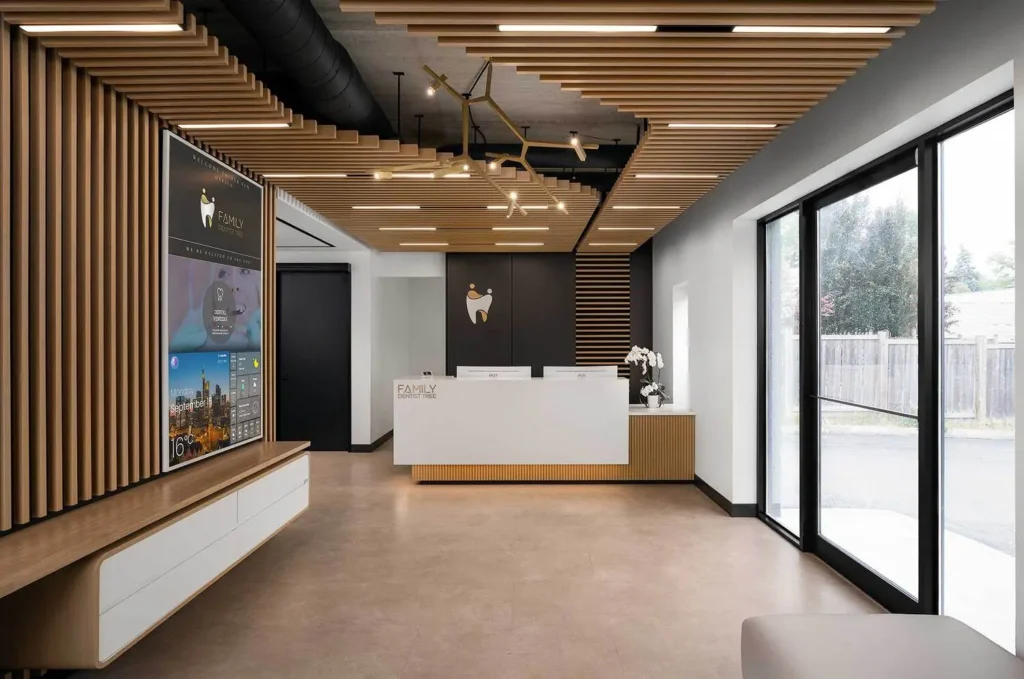
Our goal is for you to leave our office with a memorable and enjoyable experience. Our welcoming and compassionate staff will do everything they can to make you feel right at home. Tour our dental studio before you commit! Meet our Oakville dentists and see how we make every smile our priority.
- Hours
- Monday to Thursday: 8:00am to 7:00pm
Friday: 8:00am to 3:00pm
Saturday: 9:00am to 2:30pm - Phone
- (647) 362-8140
Book Your Experience Today
Let us make your next dental visit something to look forward to. New patients enjoy free take-home teeth whitening with their first visit.